Image via Joshua Earle on Unsplash

Design

Why You Need a Branding Agency for Your Next Campaign

If you’re building a brand, you partner with a branding agency; if you’re publishing ads, you hire an advertising agency. At least, that’s been the conventional wisdom.

But the times—and the tides—are changing.

Brand is now the be-all and end-all. Competition in every industry is cutthroat, shoppers drown in content while suffering from decision fatigue, and the term “expert” is used far too loosely. Only a powerful brand can cut through all this noise. That’s why branding agencies are better equipped to handle all aspects of brand growth (and that includes advertising).

It may seem counterintuitive to suggest that a branding agency can do ad campaigns better than an agency named for advertising. However, when you spend as much time as we do on marketing and messaging, you start seeing patterns.

We’ve found that traditional advertising approaches often prioritize short-term gains, while brand-centric efforts lead to long-term health and growth. Truly impactful advertising stems from a brand-first approach. Because when you market from a brand-first perspective, your advertising dollars do double duty: They drive traffic and build strong brand equity. Short-term conversions, long-time customers.

Building a Brand-First Ecosystem

Ad agencies, by and large, work to drive traffic. Their goal is to create compelling content that stops doomscrollers and daydreamers in their tracks.

So, sure, a strong ad can capture consumer attention. But then what? What’s behind the flashy imagery or tagline?

Enter the other agency. Branding agencies ensure there’s something of substance after the click-through. By approaching advertising from a brand-first perspective, branding agencies curate a story. A world. An ecosystem where every message reinforces a larger, more intentional experience.

Instead of creating isolated campaigns, brand-focused strategists are big-picture thinkers. They make sure all marketing assets ladder up to a cohesive narrative, rooted in the brand’s position. That way, wherever a consumer starts their journey, they’re pulled into a rich environment of on-brand content, visuals, and messages that create cohesion.

Consistent branding across moments and platforms matters more than ever now that “omni-shopping” is in. Gen Z may be chronically online, but brick-and-mortar purchases account for almost 50% of their spending.1 Even the older generations—who we call super consumers—are pairing the in-store-only experiences of their youth with social media shopping.2

Image via KOBU Agency on Unsplash

With so many different avenues to discover a brand, prioritizing its core (rather than just its consumer outreach arm) simply makes sense.

Brand-First Ad Strategies: Better for Everyone

Brand-oriented marketing offers an improved experience for consumers. In tandem, that benefits the brands selling to them.

Approaching advertising from a brand-first position—rather than a “drive clicks at any cost” angle—allows for:

  • Consumer-driven strategy – No one knows consumer behavior quite like branding agencies. After decades of deep dives into the individual’s needs and motivations, brand-centric agencies have developed a profound sense of your target audience. All this research is essential to creating insight-backed content that resonates with, rather than simply “sells to,” your consumer.
  • Cohesive messaging – Because branding agencies develop a deeper understanding of an organization and its central objectives, they can more easily communicate the brand’s appeal through ad content. When you can firmly grasp brand positioning, you can guarantee consistent and powerful communication across all channels.
  • Campaign longevity – Branding agencies build advertising campaigns with a lot of legs. They focus on increasing brand awareness long into the future. Unlike flash-in-the-pan ad content, brand-forward campaigns can be extended, iterated upon, and refreshed for years to come.
  • Efficient processes – The holistic, start-to-finish philosophy of a branding agency saves time on back and forth. Keeping the process within a single team, rather than operating with fragmented layers of advertising specialists, leads to a more streamlined affair for all.

Notice that all these advantages have a lasting impact. An advertising-only approach can’t compete with a brand strategy designed to go the distance.

The Brand-Centric Advertising Approach in Action

Admittedly, the lines between branding and advertising agencies are blurring. (That may be because ad agencies have recognized the value of being brand-first. Many now offer more of a deep-dive into branding.)

Even so, branding agencies are distinct from their advertising counterparts. So much so that true branding agencies take an entirely separate, top-to-bottom approach when developing an ad campaign.

We don’t like to be too rigid in our approach (that’s part of the magic), but our brand-driven ad campaigns tend to materialize like so:

  • Step 1: Uncover – It starts with intentional reconnaissance. We study the target consumer’s mindset and, by extension, the market at large. When ad agencies do research, they’re trying to understand what sells. We work to understand what motivates, educates, inspires, delights, and surprises the ideal buyer. What’s the underlying story? The theme? The spark that makes this brand special in the context of the broader landscape?
  • Step 2: Nurture – Before shouting a brand from the rooftops, our team makes sure they’re ready for attention. We help solidify internal and external positioning. We dial in the messaging and tone of voice. We massage the visual identity until it’s primed for eager eyes. The goal of all this is to ensure that when a shopper enters into the brand ecosystem, they feel a sense of trust and, eventually, recognition.
  • Step 3: Create – With a clear idea of the brand’s je ne sais quoi and the insights to back up any decisions, we make moves. Creative moves. Across digital, social, and retail channels, we develop emotion-rousing, eye-catching assets that compel and convert. And every single one ties back to the central brand strategy.
  • Step 4: Expand – After a successful ad campaign comes the inevitable question: What’s next? We hunt for the answer. Whether it’s a follow-up Facebook push or a suggested line extension, we’re always reviewing the facts and figures, looking for ways to extend the experience you’ve curated for your consumer base.

When you take a brand-first approach, you—perhaps unsurprisingly—wind up with better ad performance and a stronger brand. We’ve seen it time and time again.

Case Study: Cincinnati Children's Hospital

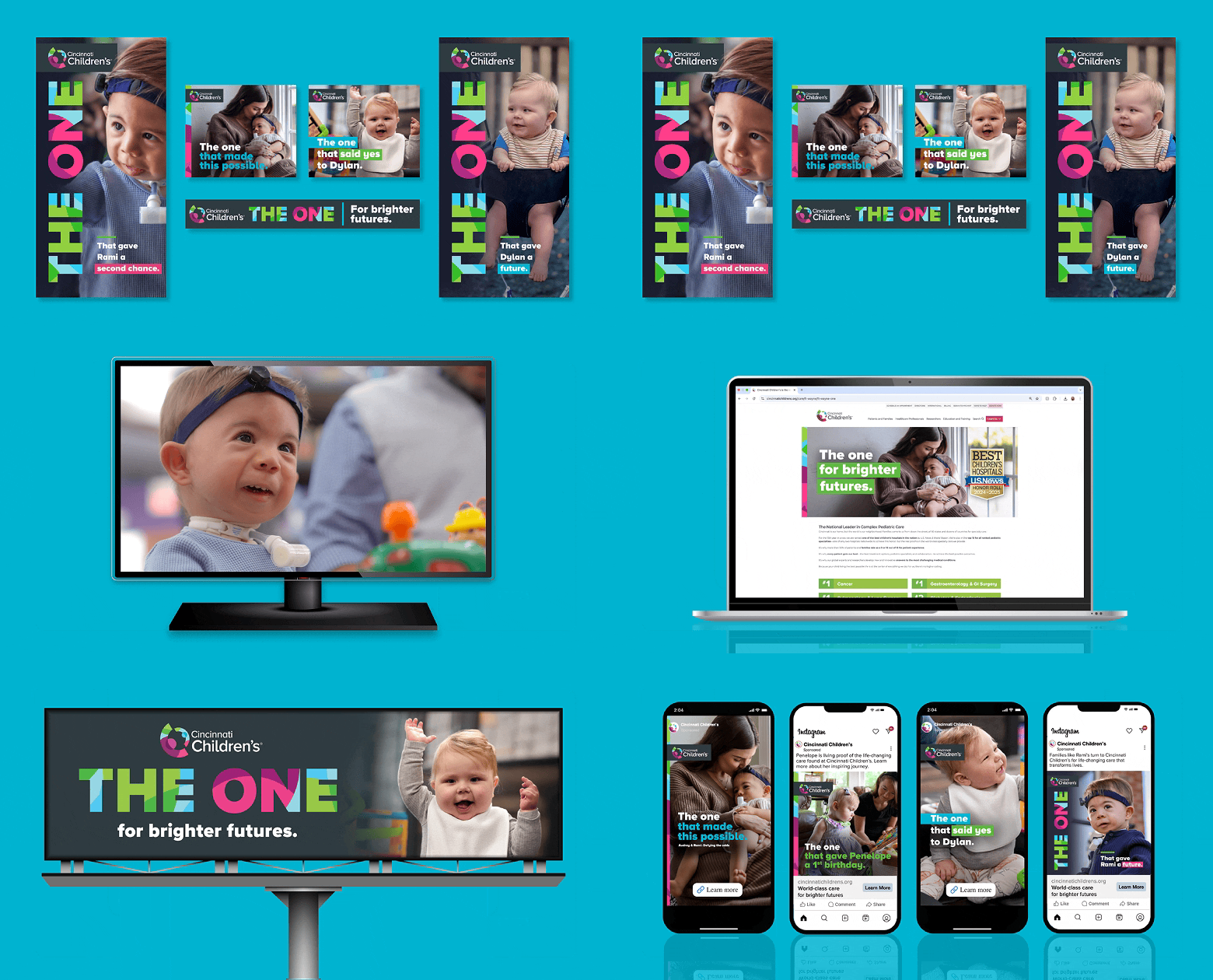
When we partnered with Cincinnati Children’s Hospital, our challenge was to build trust and recognition outside of the Cincinnati area. So, rather than focusing on the hospital’s “service offerings”—something every healthcare facility provides—we led with brand, heroing what makes Cincinnati Children’s Hospital unique.

After refreshing the brand’s positioning, we translated that work into compelling advertising. Across print, TV, and social media, we highlighted the outcomes of pediatric care through heartfelt patient stories. Heroic imagery of children who’ve overcome health challenges exudes joy, while voice-overs from parents pull at the heartstrings.

Promotional material became emotional material.
By emphasizing the core mission and impact of the institution—their brand—we built an adaptable campaign that elevated the messaging beyond typical healthcare communications.

Case Study: Naväge

With nasal health brand Naväge, we had a head start—one that exemplifies the importance of leaning into branding.

Our team was involved in creating Naväge’s new brand strategy and identity. So, when it came time to design packaging, run digital campaigns, and execute social media activations, we already knew the brand inside and out.

Because every asset and TV spot stemmed from a brand-focused perspective, it was easy to make all marketing materials an organic extension of Naväge’s core identity and values. We used the simple promise of breathing easy to guide the brand away from function-first messaging and toward a higher-order approach that emphasized total brand awareness.

Instead of isolated promotions, we wove a unified message across multiple touchpoints. That tied back to an entire ecosystem of products and promises—which has led to increased sales, engagement, and brand recognition.

It's Time to Embrace Brand-Focused Advertising

Although advertising agencies have their place, we’d argue that, 99 times out of 100, a brand-first approach is better. While advertising shapes how consumers see your company, branding connects your brand to how consumers see themselves. Ask yourself: which option is more powerful for a blossoming business?

Through full-spectrum strategy, branding agencies deliver longer-lasting results that can stretch your budget and grow the brand behind the ads.

Are we biased toward brand? Sure, but not in the way you might think. We didn’t write a pro-branding thinkpiece because we’re that type of agency. We built Spicefire as a branding agency because we believe in the power of a brand-first approach. If we’ve turned you into a branding believer, we should talk.
  1. Nielsen IQ. How Gen Z Consumer Behavior is Reshaping Retail. https://nielseniq.com/global/en/insights/analysis/2024/how-gen-z-consumer-behavior-is-reshaping-retail/
  2. HubSpot. How Each Generation Shops in 2024 [New Data from Our State of Consumer Trends Report]. https://blog.hubspot.com/marketing/how-each-generation-shops-differently

CONNECT

Cristina Ferrari

VP of Strategy
Share Article

Let’s create something
big together.

We love collaborating through challenges, big and small. If you're looking for a true partnership, we'd love to hear from you.